CARDIOPULMONARY EXERCISE TEST (CPET)
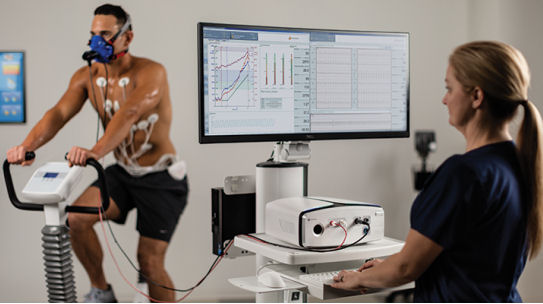
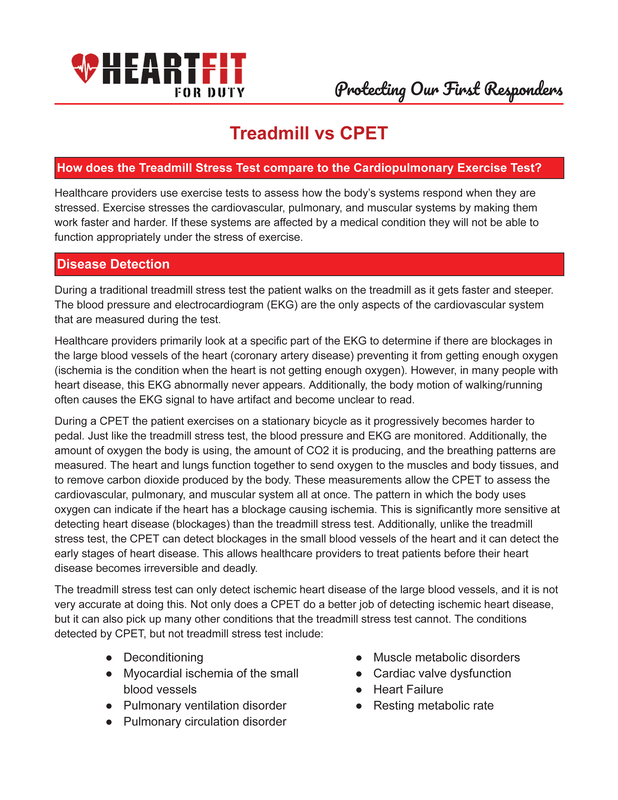
Sudden cardiac death accounts for approximately half of all on-duty death among firefighters and occurs at higher rates than those found in similar occupations. For every fatal cardiac event among fire-fighters, 17 non-fatal events are thought to occur. As part of a comprehensive occupational medical program for fire departments in the USA, the National Fire Protection Association (NFPA) and The Fire Service Joint Labor Management Wellness/Fitness Initiative (WFI) endorse a standardized submaximal test that uses the Gerkin treadmill protocol for predicting the maximal oxygen uptake (VO2max) of firefighters. Maximal exercise testing is intended to quantify aerobic exercise capacity as oxygen consumption at peak exercise (peak VO2 expressed as ml/kg/min), which is an objective measure that defines the limits of cardiopulmonary function and is considered a clinical vital sign. Peak VO2 reflects an individual’s ability to increase their heart rate and stroke volume and redirect oxygenated blood to muscles for work on demand. Exercising at levels beyond which the cardiopulmonary system can adequately supply oxygen (commonly termed the anaerobic or ventilatory threshold, or AT) involves progressively greater degrees of oxygen-independent muscle metabolism, which is dramatically less efficient than aerobic metabolism, and can compromise cardiovascular function. Individuals with subclinical coronary artery disease will develop marked deterioration of stroke volume, heart-rate and cardiac output after the AT. This exercise-induced cardiac dysfunction is pathological and can be expressed as the ischemic threshold (IT) on Cardiopulmonary Exercise testing (CPET).
https://www.mymettest.com/met-test-for-firefighters
|
|
FUNCTIONAL MOVEMENT SCREEN
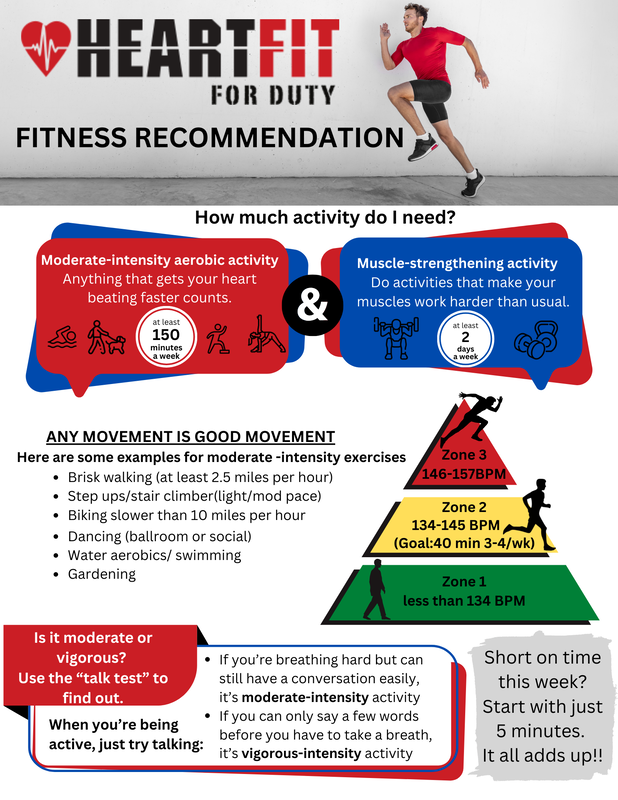
The FMS is our tool for standardized movement screening to see how an individual, no matter their age, is moving in everyday life. It takes into account both mobility and stability and equips the professional with information to make programming decisions with precision and purpose.
The screen consists of seven basic movement patterns that are essential to daily activities.
The seven movement patterns that are tested are:
The screen consists of seven basic movement patterns that are essential to daily activities.
The seven movement patterns that are tested are:
1. Deep squat
2. Hurdle step
3. In-line lunge
4. shoulder mobility
5. Active straight-leg raise
6. Trunk stability push-up
7. Rotary stability
2. Hurdle step
3. In-line lunge
4. shoulder mobility
5. Active straight-leg raise
6. Trunk stability push-up
7. Rotary stability
Hand Grip Strength
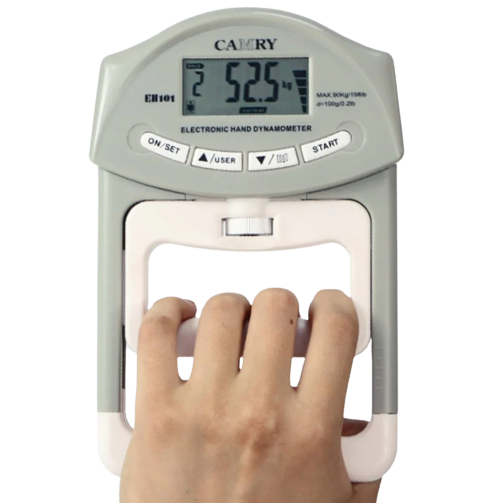
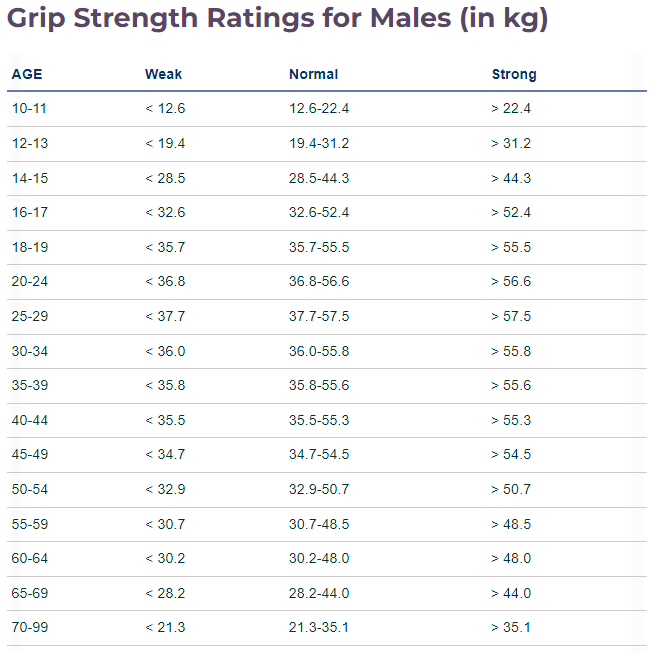
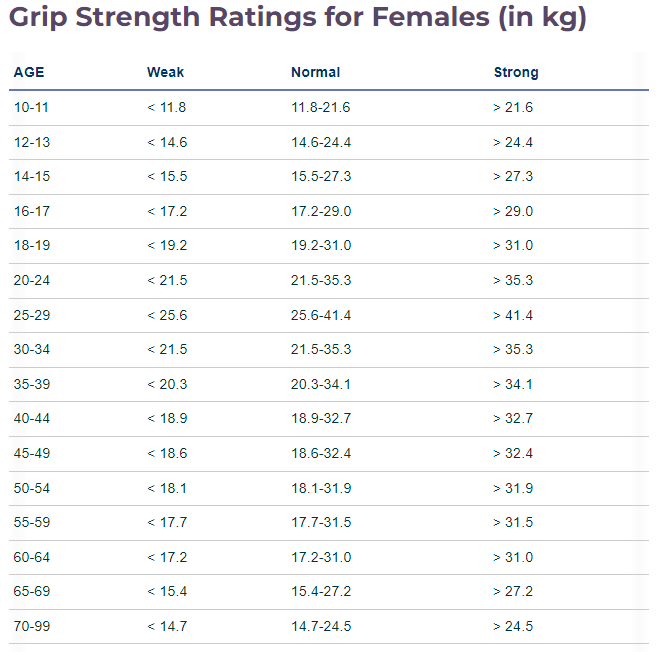
From gripping a firehose to lifting and carrying heavy objects during an emergency, a sure grip is a strong asset to a firefighter. NFPA 1582 requires grip strength to be measured using a Hand Dynamometer. The test simply involves gripping the dynamometer as hard as possible to measure the force of one’s grip.
The candidate will get three attempts on each hand, with the highest score of either hand recorded as the result.
"Our study of over 4,600 people shows that better handgrip strength is associated with having a healthier heart structure and function," says Petersen. "Handgrip strength is an inexpensive, reproducible and easy to implement measure, and could become an important method for identifying those at a high risk of heart disease and preventing major life-changing events, such as heart attacks."
The candidate will get three attempts on each hand, with the highest score of either hand recorded as the result.
"Our study of over 4,600 people shows that better handgrip strength is associated with having a healthier heart structure and function," says Petersen. "Handgrip strength is an inexpensive, reproducible and easy to implement measure, and could become an important method for identifying those at a high risk of heart disease and preventing major life-changing events, such as heart attacks."
Sebastian E. Beyer, Mihir M. Sanghvi, Nay Aung, Alice Hosking, Jackie A. Cooper, José Miguel Paiva, Aaron M. Lee, Kenneth Fung, Elena Lukaschuk, Valentina Carapella, Murray A. Mittleman, Soren Brage, Stefan K. Piechnik, Stefan Neubauer, Steffen E. Petersen. Prospective association between handgrip strength and cardiac structure and function in UK adults. PLOS ONE, 2018; 13 (3): e0193124 DOI: 10.1371/journal.pone.0193124
|
|
Camry Electronic Hand Dynamometer Instruction manual
Sit-and-Reach
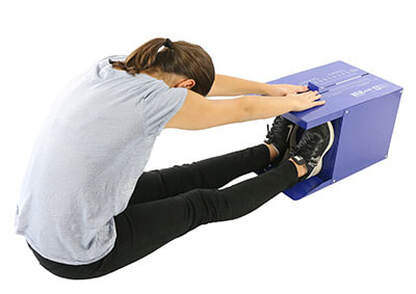
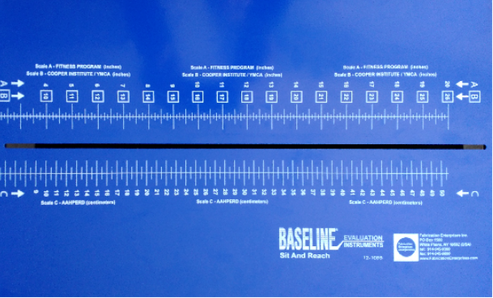
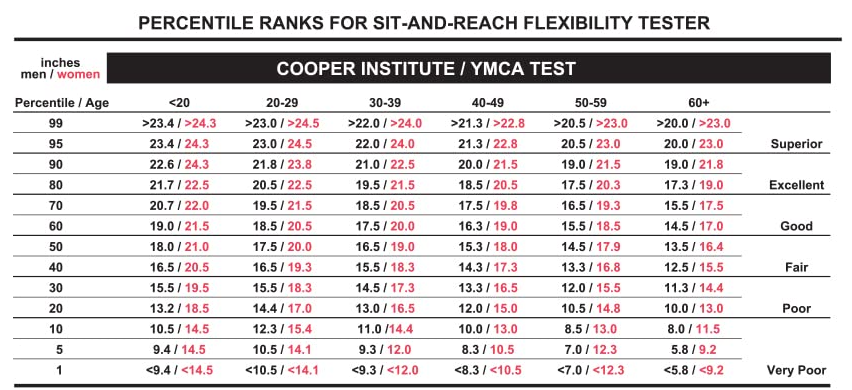
Sit and reach test mainly access the tightness in the hamstrings and the lower back because tightness in the hamstrings and the low back is more frequently linked to muscle stiffness and pain. Even though flexibility can vary with different parts of the body, the results given from a sit and reach trunk box flexibility test can give a practitioner invaluable information about a patient’s overall flexibility. This sit-and-reach test is an excellent way to determine your overall levels of flexibility. If you find that you have scored extremely low, this is a good sign that you need to incorporate more flexibility training into your daily routine.
Procedure:
Procedure:
- The patient sits on the floor with their legs extended forwards and feet flat against the box.
- Instruct the athlete to slowly reach forwards as far as possible with the palms of their hands, and hold that stretch for three seconds.
- Ensure that the athlete:
- Keeps their hands on the box at all times.
- Keeps their knees extended.
- Breaths normally throughout and does not hold their breath.
- Use’s one smooth movement rather than a bouncing or jerking movement.
https://www.topendsports.com/testing/tests/sit-and-reach-presidents.htm
|
|
Push-Ups
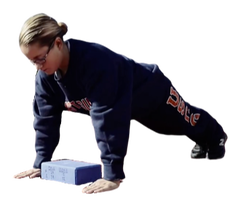
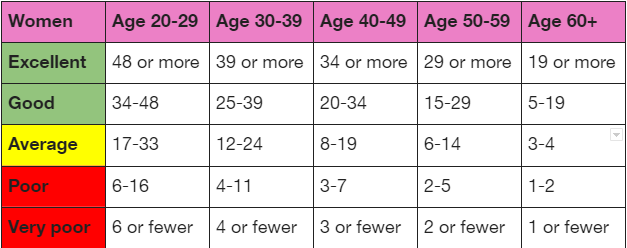
The push-up fitness test is a measure of upper body strength and endurance. This variation of the push-up test requires the participant to perform the maximum number of push-up as possible in one-minute.
Equipment required
A stopwatch or clock with a second-hand is required for timing one minute. A block of foam or some other object is placed under the chest to standardize how far the chest is lowered.
Preparation
The purpose of the push-up test and the test procedures should be fully explained to the participant before starting. Make sure that they have no pre-existing ailments that will affect the test result or will get worse by participating in the test.
Procedure
Begin in a starting position with the hands placed shoulder width apart, the body straight and up on the toes. Keeping the back and knees straight, the subject lowers the body to a predetermined point (e.g. to touch some other object, or until there is a 90-degree angle at the elbows), then returns back to the starting position with the arms extended. This action is repeated, and the test continues for one minute. Resting in the up position is allowed.
Equipment required
A stopwatch or clock with a second-hand is required for timing one minute. A block of foam or some other object is placed under the chest to standardize how far the chest is lowered.
Preparation
The purpose of the push-up test and the test procedures should be fully explained to the participant before starting. Make sure that they have no pre-existing ailments that will affect the test result or will get worse by participating in the test.
Procedure
Begin in a starting position with the hands placed shoulder width apart, the body straight and up on the toes. Keeping the back and knees straight, the subject lowers the body to a predetermined point (e.g. to touch some other object, or until there is a 90-degree angle at the elbows), then returns back to the starting position with the arms extended. This action is repeated, and the test continues for one minute. Resting in the up position is allowed.
https://www.pushupguide.com/tests/one-minute.htm

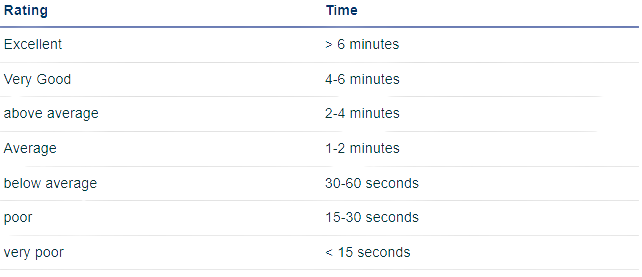
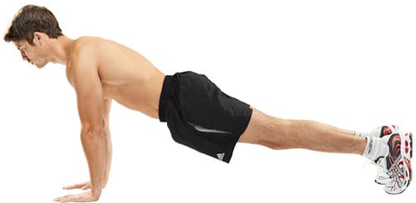
Full Plank Hold to failure
The plank test measures the control and endurance of the back/core stabilizing muscles. The aim of this test is to hold an elevated plank position for as long as possible.
Planks are the ultimate test of total-body strength, not just your core. That’s why they’re the groundwork for many bodyweight exercises, like push-ups.
How to do a proper plank
There are many different ways to achieve the perfect plank, but here’s a step-by-step breakdown on how to do a high plank.
How to do a proper plank
There are many different ways to achieve the perfect plank, but here’s a step-by-step breakdown on how to do a high plank.
- Get into a tabletop position with your shoulders directly over your wrists and hips in line with your knees.
- Engaging your abs, shoulders, back, and glutes, extend your legs back to straighten into a plank and hold.
- If you can, do the exercise in front of a mirror, to check that your butt isn’t raised. (A common mistake, but your body should be flat as opposed to an upside down-V shape.)